Social Media

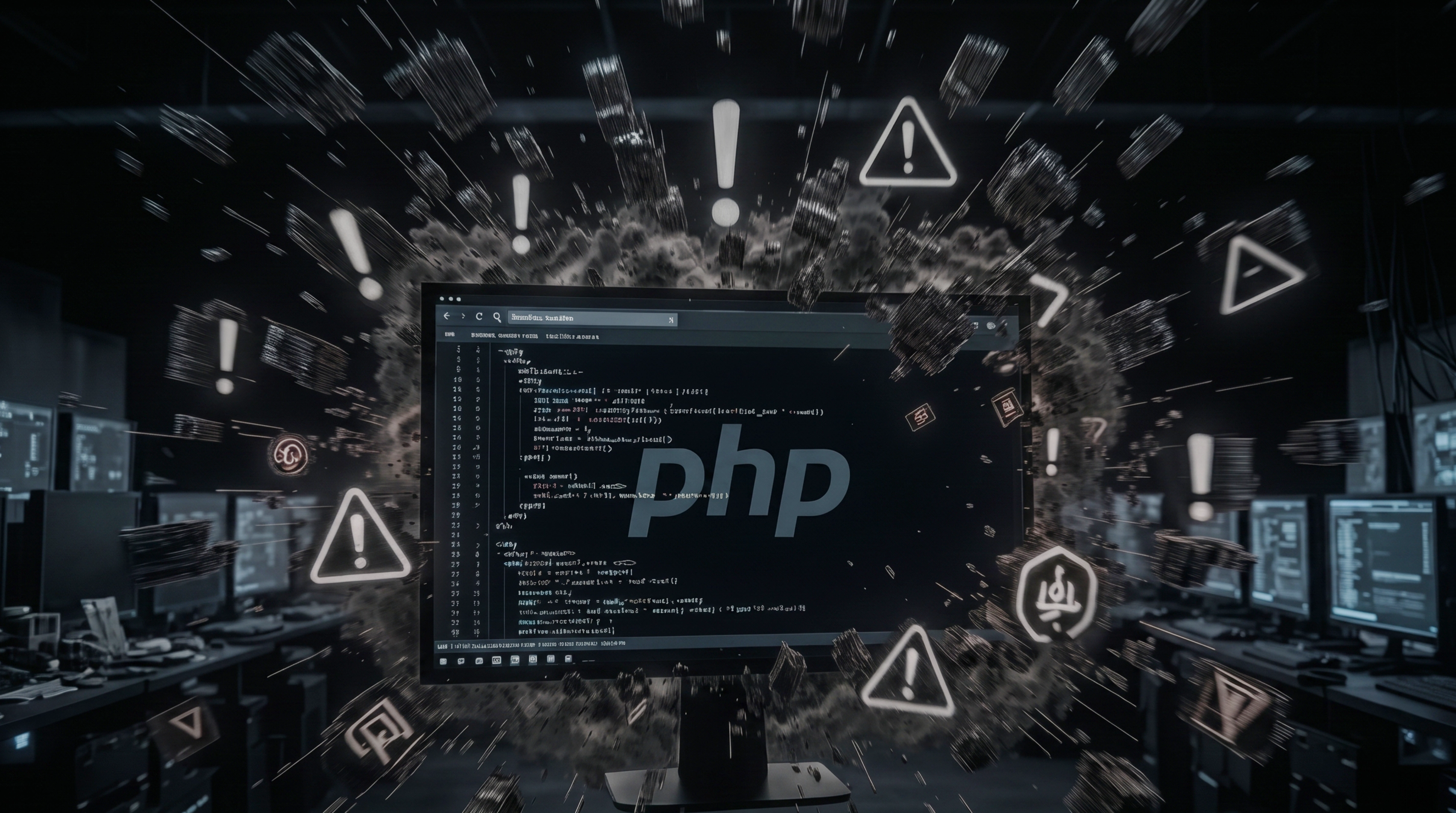
A programming language that quietly powers millions of websites has become the focus of an international cybersecurity emergency. In October 2026, critical vulnerabilities in PHP triggered urgent warnings from cybersecurity authorities, encouraged organizations to patch vulnerable servers, and led some website operators to temporarily take services offline.
The incident, widely associated with the name **PHP2Shell**, highlights a growing challenge for the digital world: a weakness in widely used software can affect far more than a single website. It can threaten interconnected businesses, public services, online communities, and e-commerce platforms.
Artificial intelligence also played a significant role in bringing the vulnerabilities to light, demonstrating how AI can strengthen cybersecurity while raising questions about how quickly similar discoveries might be turned into attacks.
So, what exactly is PHP, why did these vulnerabilities cause such concern, and what should website owners do now?
What Is PHP?
PHP stands for PHP: Hypertext Preprocessor. It is a free, open-source, server-side programming language designed primarily for web development.
Unlike JavaScript that runs in a visitor's browser, PHP commonly executes on a web server. It processes requests, communicates with databases, manages sessions, handles form submissions, and generates dynamic content before sending the resulting page or response to the visitor.
For example, when you sign in to a website, PHP may help verify your account, retrieve your profile information, and generate a personalized dashboard.
PHP is used in many familiar web technologies, including WordPress, Drupal, and numerous online applications. Frameworks such as Laravel and Symfony also help developers build sophisticated applications using PHP.
Its popularity comes from its flexibility, extensive ecosystem, database support, and ability to run on widely available hosting infrastructure.
Why Does PHP Matter to the Internet?
PHP is not simply a tool for displaying text on a webpage. It can sit at the heart of a website's backend, handling sensitive operations such as:
• User registration, authentication, and account management.
• Database queries and customer information.
• Shopping carts, orders, and payment-related workflows.
• Content management systems and publishing platforms.
• File uploads, APIs, and automated business processes.
• Session management and personalized website experiences.
Because PHP is used across such a broad range of applications, a serious vulnerability in the language itself can have consequences beyond one individual website.
The important distinction is that a PHP vulnerability can affect the underlying software used by an application, rather than being limited to a bug in a particular WordPress theme, plugin, or custom website.
What Happened in October 2026?
On October 21, 2026, PHP security updates addressed two critical vulnerabilities identified as CVE-2026-109618 and CVE-2026-109619.
The vulnerabilities were associated with the PHP2Shell security incident. According to cybersecurity advisories, under certain conditions, the flaws could allow an unauthenticated attacker to execute code remotely on a vulnerable server.
In practical terms, this means an attacker might be able to exploit a vulnerable system without first logging in through a legitimate account.
Depending on the server's configuration, permissions, and the success of an attack, the consequences could include unauthorized access to data, website tampering, service disruption, or deeper compromise of the affected infrastructure.
Security authorities in Europe and the United States urged organizations to identify affected systems and apply the relevant security updates. Some operators also temporarily took services offline while evaluating their exposure.
The incident demonstrated why vulnerabilities in foundational software can require coordinated action across countries, hosting providers, software developers, and organizations of all sizes.
How Could These Vulnerabilities Threaten Websites?
A vulnerability does not automatically mean every website running PHP has been hacked. The actual risk depends on the affected PHP version, the deployment environment, and whether the vulnerable code path can be reached.
However, vulnerabilities capable of enabling remote code execution are especially serious because they can potentially give an attacker the ability to run commands or code on a server.
Here are some of the potential consequences.
1. Unauthorized Server Access
If an attacker successfully exploits a vulnerable server, they may gain a foothold that allows further investigation or abuse of the system.
The extent of access depends on the permissions and security controls in place.
2. Exposure of Sensitive Data
Web applications frequently process personal information, account details, business records, and other confidential data. A compromised server could expose information accessible to the affected application or operating-system account.
3. Website Disruption or Defacement
Attackers may alter website content, interfere with normal operations, or disrupt services. For an e-commerce platform, downtime can also affect customers, orders, and revenue.
4. Further Attacks Within a Network
A compromised web server may provide an opportunity to investigate connected systems or attempt additional attacks, particularly where network access and permissions are poorly restricted.
These are potential impacts of a successful compromise, not proof that every affected website has experienced an incident.
How Did Artificial Intelligence Help Uncover the Problem?
One of the most significant aspects of the PHP2Shell incident was the role of AI-assisted security research.
Security researchers used advanced AI capabilities to help analyze complex software behavior, investigate potential weaknesses, and validate vulnerabilities. The discoveries highlighted how AI can help researchers examine code and explore scenarios that might otherwise take considerable time to investigate.
AI can support defensive security work by helping teams:
• Analyze large codebases for suspicious patterns.
• Investigate possible memory-safety issues.
• Develop and test vulnerability hypotheses.
• Review potential fixes and regression risks.
• Prioritize findings for human security experts.
However, AI does not automatically make software secure. Its findings still require careful validation, responsible disclosure, testing, and appropriate remediation.
The same general capabilities that help defenders understand vulnerabilities can also lower barriers for malicious actors seeking to discover and exploit weaknesses. This makes coordinated disclosure, secure development practices, and timely patching increasingly important.
Why Did the Incident Become a Global Cybersecurity Scramble?
The urgency came from a combination of factors.
First, PHP is widely deployed. A weakness in a popular backend technology can potentially affect many unrelated websites and organizations.
Second, remote code execution can have severe consequences. When a vulnerability can be exploited without authentication, organizations cannot rely solely on login security to protect an exposed service.
Third, internet-facing systems are difficult to inventory perfectly. Large organizations may operate websites, APIs, legacy applications, and third-party services across different servers and hosting providers. Some systems may be overlooked during routine maintenance.
Fourth, security fixes must be deployed throughout the software stack. Updating a content management system does not necessarily update the PHP runtime used by the web server.
Finally, attackers may act quickly after a vulnerability becomes public. Organizations need to determine which systems are affected, apply fixes, verify their deployments, and investigate possible signs of compromise.
Together, these factors explain why governments, security agencies, technology companies, and website operators treated the incident as an urgent infrastructure-security issue.
Does This Mean WordPress Websites Are at Risk?
WordPress is built primarily on PHP, so the PHP runtime used by a WordPress website is an important part of its security.
However, a critical PHP vulnerability should not be confused with a vulnerability in WordPress itself.
A WordPress website may have an up-to-date core installation and still use a vulnerable PHP runtime supplied by its hosting environment. Conversely, running a fixed PHP version does not automatically make a website secure against every other vulnerability.
Website owners should check the entire environment, including:
• The PHP runtime and its exact version.
• WordPress core, themes, and plugins.
• Server configuration and file permissions.
• Database access and credentials.
• Authentication, backups, and security monitoring.
Important: Updating WordPress plugins alone does not fix a vulnerability in the underlying PHP runtime. The relevant PHP security update must be applied through the hosting environment or server-management process.
What Should Website Owners Do to Protect Their Websites?
If you manage a website, take the following steps to reduce risk.
Step 1: Identify Your PHP Version
Check your hosting control panel, server configuration, or hosting provider's documentation to determine which PHP version your website actually uses.
If you operate multiple websites, subdomains, or applications, check each environment rather than assuming they all use the same runtime.
Step 2: Apply the Relevant Security Updates
Consult the official PHP security advisories and your hosting provider's guidance. Install a fixed PHP release compatible with your application and deployment environment.
As listed in the official PHP2Shell incident coverage, fixed release versions include PHP 8.2.35, 8.3.36, 8.4.27, and 8.5.12. Confirm the latest applicable security release before upgrading, as additional updates may become available.
If your hosting provider manages PHP, contact its support team and ask whether the relevant patches have been deployed to your server.
Step 3: Check All Websites and Subdomains
Businesses often run separate applications for their main website, online store, customer portal, API, and administration dashboard.
Each application may use a different PHP runtime or hosting configuration. Build an inventory and verify that every internet-facing system has been checked.
Step 4: Review Logs and Investigate Suspicious Activity
Look for unexpected requests, unfamiliar processes, unusual outbound connections, suspicious file changes, and other indicators of compromise.
A security update prevents exploitation of the patched vulnerability, but it does not necessarily remove malicious code that an attacker may already have installed.
If you suspect a breach, preserve relevant logs, investigate the affected environment, and involve a qualified incident-response professional.
Step 5: Strengthen Your Overall Security
Use multi-factor authentication for administrative accounts, enforce least-privilege permissions, protect secrets, maintain tested backups, and monitor important systems.
Keep WordPress core, plugins, themes, libraries, and operating-system components updated as well.
Step 6: Escalate if You Cannot Patch
If an affected internet-facing system cannot be patched or adequately mitigated, follow the applicable official advisory and your incident-response procedures. Temporarily isolating or taking the system offline may be necessary until the risk is addressed.
Do not assume that a firewall, security plugin, or CDN alone resolves a vulnerability in the PHP runtime.
What Does This Mean for Online Shoppers and Everyday Users?
Most visitors do not need to update PHP themselves because the website operator or hosting provider is responsible for maintaining the server.
Nevertheless, users can take sensible precautions:
• Install updates for their browsers and devices.
• Use unique passwords and a password manager.
• Enable multi-factor authentication where available.
• Be cautious of phishing messages that exploit cybersecurity news.
• Follow legitimate security notices from websites and service providers.
If a service asks you to reset a password or take another security action, verify that the request is genuine before clicking links or sharing information.
The PHP2Shell incident does not mean that every website is compromised or that every visitor's information has been exposed. It means that affected systems require prompt and appropriate security action.
The Bigger Lesson: Security Must Be Continuous
The PHP2Shell incident illustrates a fundamental reality of modern software: technologies that have supported the internet for years can still contain serious vulnerabilities.
No programming language, framework, hosting provider, or security product can guarantee complete protection. Strong security depends on continuous maintenance, timely patching, secure configurations, monitoring, and a clear response plan.
AI-assisted vulnerability research may accelerate the discovery of hidden weaknesses, giving defenders valuable opportunities to fix problems before they cause widespread damage. At the same time, organizations must prepare for a world in which vulnerability discovery and exploitation may both move faster.
For website owners, the most practical response is straightforward: know what software your systems run, keep it supported, apply security updates promptly, and investigate suspicious activity rather than assuming that a patch alone resolves every possible risk.
For Novleot readers, the takeaway is clear: protecting a website is not a one-time task. It is an ongoing responsibility that helps safeguard customers, businesses, and the digital services people rely on every day.
Sources and Further Reading
1. PHP Official Documentation — https://www.php.net/manual/en/introduction.php
2. PHP Supported Versions — https://www.php.net/supported-versions.php
3. U.S. National Security Agency — https://www.nsa.gov/Press-Room/Press-Releases-Statements/Press-Release-View/Article/4630238/nsa-advisory-critical-patches-recommended-for-php-vulnerabilities/
4. European Union Agency for Cybersecurity (ENISA) — https://www.enisa.europa.eu/news/joint-statement-on-critical-php-vulnerabilities
5. UK National Cyber Security Centre — https://www.ncsc.gov.uk/news/critical-security-issue-affecting-php
Editorial note: Security details and recommended versions can change as new advisories are published. Consult official PHP security notices and your hosting provider for the latest applicable guidance.